Step into Zanzibar’s greener side, where forest trails, mangroves and the rare red colobus monkey reveal a quieter, more natural side of the island.
Jozani Chwaka Bay National Park, Zanzibar
Red Colobus Monkeys, Forest Trails & Mangroves
Year-Round June–October is especially comfortable
2–4 Hours
Jozani is the best-known place to encounter Zanzibar’s endemic red colobus monkeys in their natural forest habitat.
Explore shaded forest trails and mangrove boardwalks with a knowledgeable local guide who brings the ecosystem to life.
Photograph primates, tropical vegetation, birdlife and the quieter details of Zanzibar’s natural landscape.
Step away from the beaches and discover the island’s greener, more ecological side through one of its most distinctive nature experiences.

Jozani Forest offers a completely different side of Zanzibar — green, quiet and rich in wildlife.
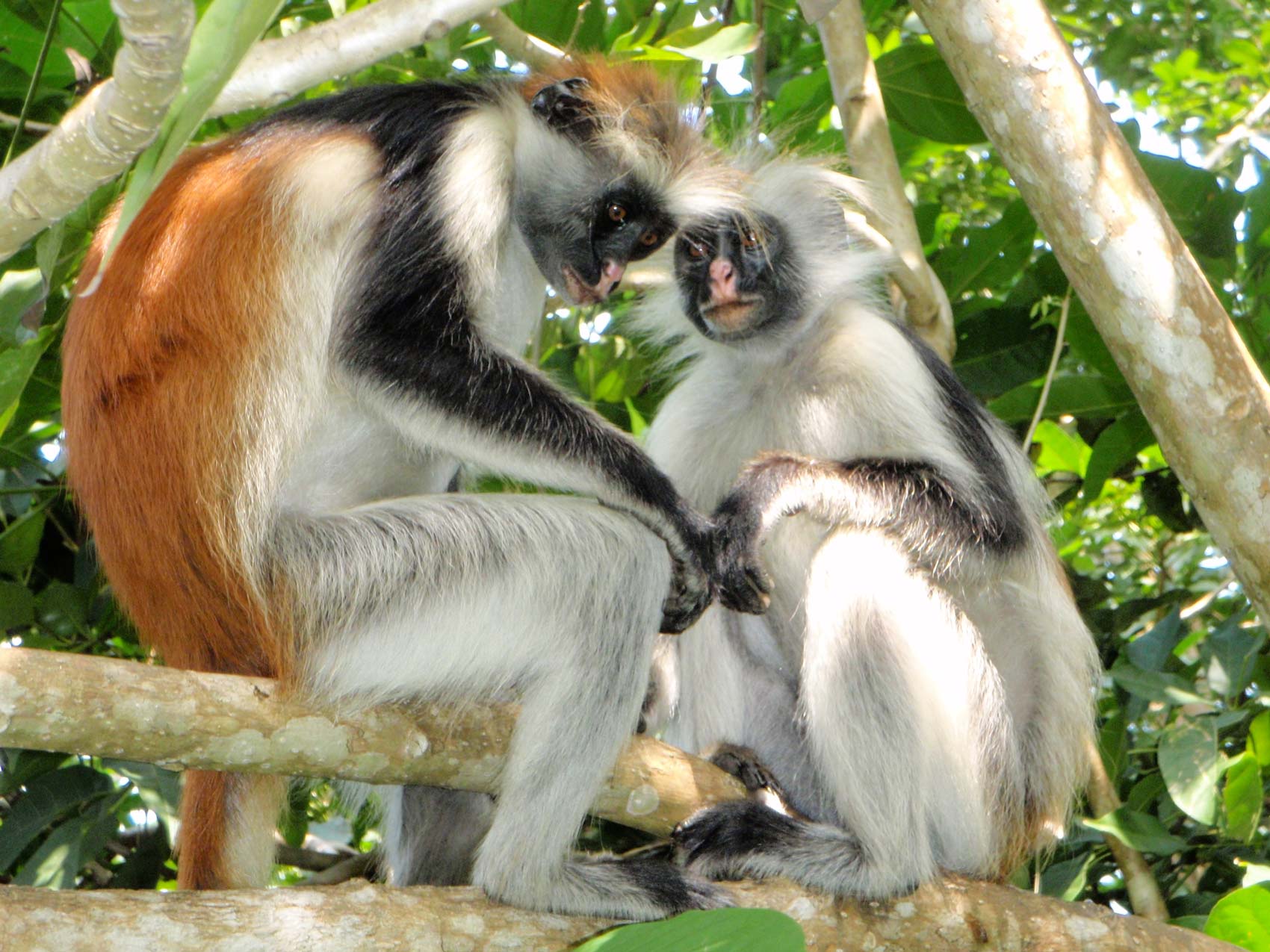
Located within Jozani Chwaka Bay National Park, the forest is best known as the natural home of the Zanzibar red colobus monkey, a species found only in the Zanzibar archipelago. Walking beneath the forest canopy gives travelers the chance to observe these primates at close range while also discovering tropical vegetation, birdlife and the wider forest ecosystem.
The experience extends beyond the monkeys. Guided trails introduce visitors to native plants and the ecology of the forest, while nearby mangrove boardwalks reveal another important habitat shaped by the island’s tidal environment.
For travelers spending most of their time along the coast, Jozani adds welcome contrast — a few hours away from the beach and an opportunity to experience Zanzibar as a living natural environment, not simply an island escape.
With the right guide, it becomes more than a wildlife stop. It is a short but meaningful introduction to one of Zanzibar’s most distinctive ecosystems.
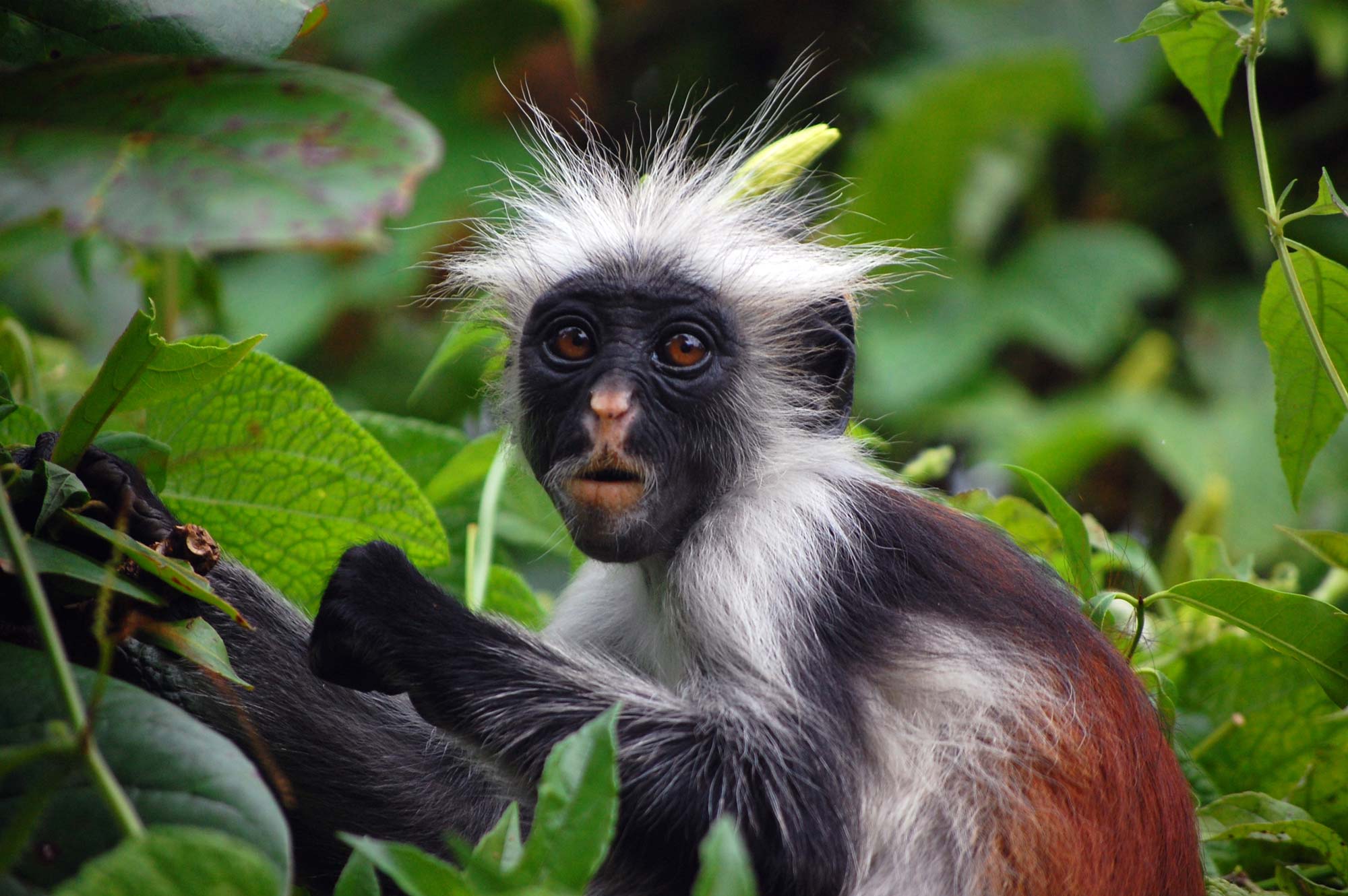
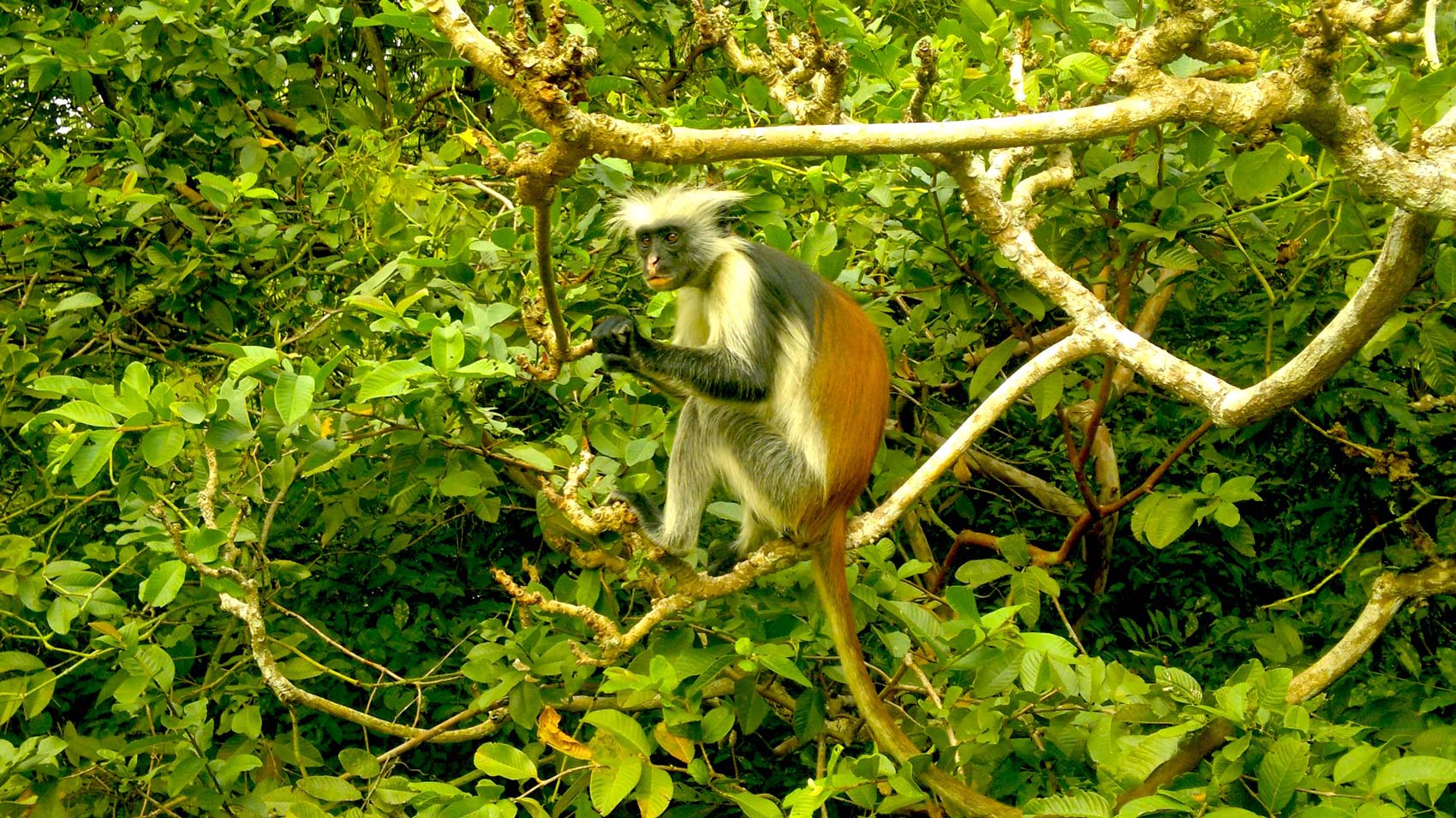
The Zanzibar red colobus is the star of Jozani Forest and one of the island’s most distinctive wildlife species. With their reddish-brown backs, pale markings and expressive faces, they are surprisingly easy to recognize once you know what to look for.
Unlike many wildlife experiences that require long drives or distant viewing, Jozani offers the chance to observe these monkeys at relatively close range as they move through the forest canopy and around the walking trails.
A knowledgeable guide helps you understand their behavior, diet, social structure and the role they play within the forest ecosystem, while also making sure the encounter remains respectful and well managed.

The forest walk is an important part of the Jozani experience in its own right.
Shaded trails lead through dense tropical vegetation, where guides point out native plants, birdlife and the smaller details that are easy to miss when moving too quickly. The atmosphere is calm, green and noticeably different from Zanzibar’s beaches and busier coastal areas.
Depending on the route, the experience may also include sections of mangrove habitat, giving travelers a better understanding of how different ecosystems connect across the island.
Many Jozani Forest visits also include time in the mangrove area where a raised wooden boardwalk leads through one of Zanzibar’s most important coastal ecosystems.
Mangroves play a major role in protecting the shoreline, supporting marine life and providing habitat for birds and other species. Walking through this section gives travelers a very different perspective from the inland forest and helps show how closely Zanzibar’s landscapes are connected.
It is a quieter part of the experience, but an important one — especially for travelers interested in nature, ecology and the less obvious side of the island.
Jozani works easily as a half-day experience and combines well with other activities around Zanzibar.
It is especially suited to travelers looking for:
Jozani plays an important role in protecting Zanzibar’s native wildlife, forest habitats and coastal ecosystems.
The forest is especially significant for the Zanzibar red colobus monkey, whose survival depends on the continued protection of its natural habitat. Guided visits also help travelers understand the wider conservation value of the forest, from biodiversity and habitat protection to the relationship between local communities and the environment.
For visitors, this adds another layer to the experience — Jozani is not only a place to see wildlife, but also a chance to understand why this ecosystem matters.
For a comfortable Jozani Forest visit, we recommend:
The Zanzibar red colobus monkey is the main highlight. Jozani is one of the best places to observe this distinctive primate in its natural habitat, alongside tropical forest, birdlife and mangrove ecosystems.
Most visits take around 2–4 hours, depending on the walking route, pace and whether the mangrove boardwalk is included. It works very well as a half-day experience.
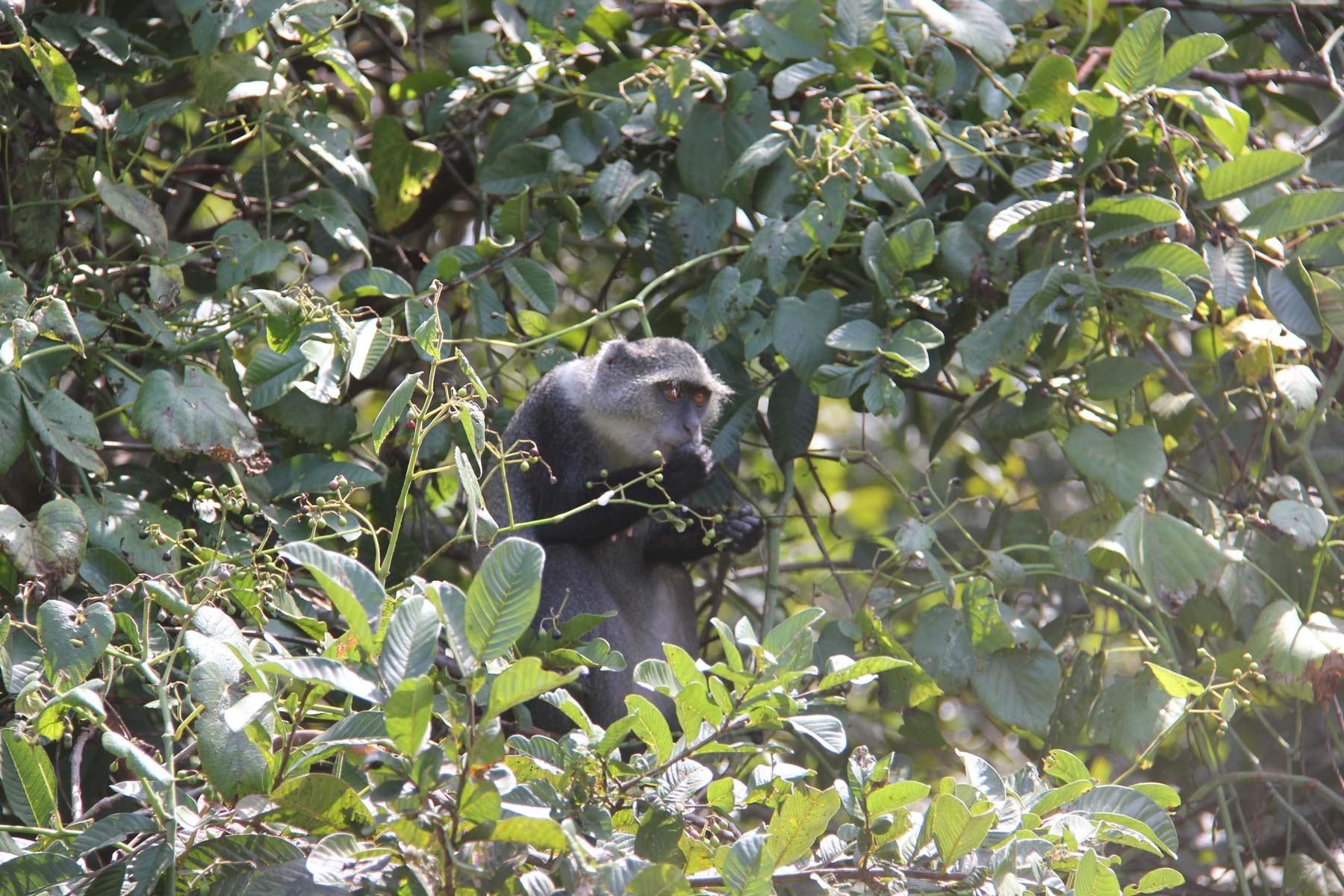
The red colobus monkey is the star attraction, but the forest also supports birds, butterflies, smaller wildlife and a rich variety of tropical vegetation. Sightings naturally vary from visit to visit.
Yes. The walks are generally manageable for families, especially with children who enjoy wildlife and nature. We can also keep the pace relaxed and choose the most suitable route.
Comfortable walking shoes, lightweight clothing, drinking water, insect repellent, sun protection and a camera or smartphone are recommended. A light rain jacket is useful during wetter periods.
Tell us your preferred date and travel plans, and we’ll arrange the experience around your Zanzibar stay.